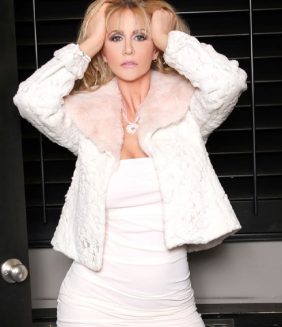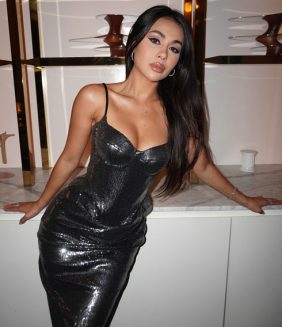
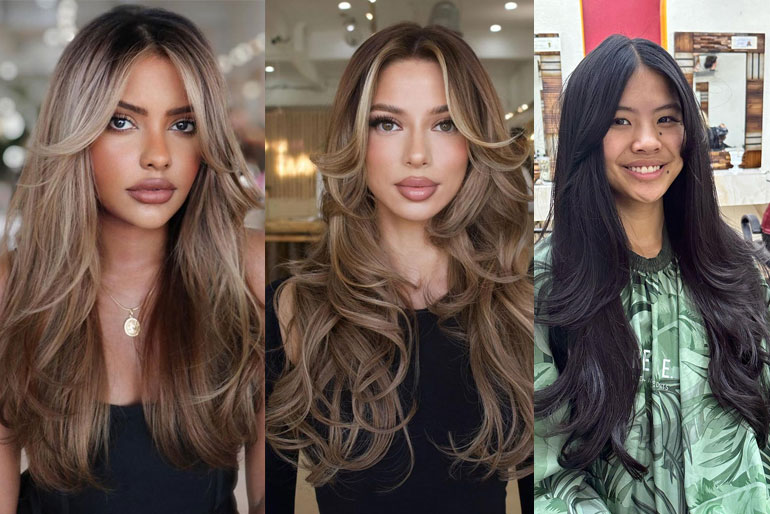
If you like the idea of effortless hair that moves when you do, long layers paired with curtain bangs might be your perfect style. This combination has become a favorite on social media and red carpets alike, yet it feels relaxed enough for everyday life. Below is a straightforward look at why it works, how to get it, and what to expect once you have it—no complicated terms or salon-only lingo required.
What Long Layers Actually Do
Picture your hair as a stack of ribbons. When every ribbon ends at the same spot, the stack can look flat and heavy. Long layers trim a few of those ribbons shorter so the stack gains shape, bounce, and an airy finish. The overall length stays long; the light snips inside the shape keep everything from sitting in one thick sheet. Because less weight hangs at the bottom, layers help straight hair look fuller and stop wavy or curly hair from forming a pyramid.
Why Curtain Bangs Go Hand in Hand
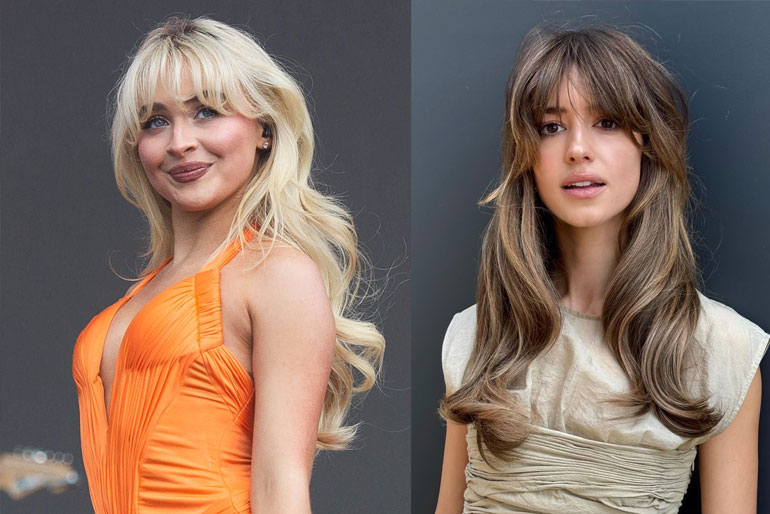
Curtain bangs are fringe that parts down the center (or slightly off-center) and sweep to the sides, similar to two soft drapes. They blend into the long layers behind them, so the cut feels like one seamless shape instead of bangs pasted on top. This style flatters almost every face shape because the shortest pieces start around the eyebrows, while the longest melt into the cheeks or jawline. That gentle slope frames your eyes, softens angles, and draws attention upward.
Everyday Benefits
- Low-Commitment Fringe
Classic straight-across bangs need constant trims and precise styling. Curtain bangs, on the other hand, keep looking good even as they grow out because the shape is already longer at the edges. Skip a trim or tuck them behind your ears, and they blend right in. - Easy Volume
Layers remove bulk from the lower half of your hair, which lets roots lift more easily. Curtain bangs also sit at the crown, so a quick pull of a round brush or a few seconds with a blow-dryer aimed at volume right where you want it. - Style Variety
Wear your hair down, and it swishes around your shoulders. Pull it into a ponytail and soft fringe frames your face. Twist it into a bu,n and little bits fall out on purpose for that casual glamour everyone loves.
How to Ask for the Cut
Bring two or three reference photos to your appointment. A good picture shows exactly where the shortest part of the fringe lands (brows, cheekbones, or lips) and how far back the bangs start on the crown. Tell your stylist you want long layers that remove weight without chopping off length, and curtain bangs that are shortest in the center and longer at the edges. Mention how much time you like spending on your hair each morning so the layers stay within your comfort zone.
Styling at Home
- Blow-Dry Shortcut
Flip your head upside down for the first 70% of drying time to build lift at the roots. Stand upright for the last pass and guide the ends of your layers with a paddle brush. For the bangs, aim the dryer nozzle downward while brushing each side away from your face; this smooths the surface and creates that soft sweep. - Air-Dry Friendly
Scrunch a light mousse or curl cream through damp strands and let nature handle the waves. As hair dries, twist the curtain bangs around your index fingers to remind them which direction to fall. - Curling Iron Touch-Up
If you crave extra polish, wrap large sections around a one-inch iron, turning the barrel away from your face. Release after a few seconds for loose bends. Glide the iron lightly over the fringe, flicking outward at the ends instead of rolling it tight.
Product Pointers
- Dry Shampoo keeps bangs fresh on hot days.
- Lightweight Serum adds shine without dragging layers flat.
- Flexible-Hold Spray secures movement while letting you run your fingers through.
Maintenance Schedule
Plan on a tiny fringe trim every six to eight weeks if you like the bangs to hover near your brows. The rest of the layers can go ten to twelve weeks between cuts. When you shampoo, focus cleanser on the scalp and condition only from mid-lengths down so layers stay buoyant. A silk pillowcase reduces friction, meaning fewer morning kinks to smooth away.
Does It Work on All Hair Types?
- Straight Hair gains motion and avoids looking stringy.
- Wavy Hair turns into soft beach texture with little effort.
- Curly Hair benefits too, as long layers remove the bulky triangle shape and curtain bangs shorten the curl pattern gently around the eyes.
If your hair is very fine, ask for subtle or “ghost” layers—slight interior snips that add lift without obvious steps. If your texture is super thick, request more pronounced layering to reduce weight.
Face Shape Tips
- Round Faces: Place the shortest fringe point below the eyebrow to create length.
- Square or Angular Faces: Keep the center of the fringe soft and curved to balance sharp lines.
- Long Faces: Start the bangs a bit higher on the forehead to shorten the appearance of length.
When Life Gets Busy
One of the best parts of this cut is its forgiving nature. Miss a trim, pull hair back, change your part—everything still looks intentional. You can even pin the fringe straight across for a retro vibe or sweep it all to one side for an instant glam upgrade.
Final Thoughts
Long layers with curtain bangs combine the drama of length with the playful charm of a fringe, all while staying practical for daily life. The layers lighten heavy ends, the bangs frame your features, and both work together to give your hair that lived-in movement many people seek in a fresh cut. Whether you air-dry and go or spend a few extra minutes styling, this look offers a sweet spot between effort and payoff. Ready for hair that feels light, looks modern, and moves freely? Long layers and curtain bangs might be calling your name.